- Decoding Paint Finishes: Which One Is Best?
After sifting through hundreds of paint colours, finally settling on the right one can feel like a relief. But before you reach for the paintbrushes, there’s one more decision to make: which paint finish is right for your space?
From high-gloss sheens to ultramatte and everything in between, we’re breaking down the different paint finishes and how to choose the right one for your next project.
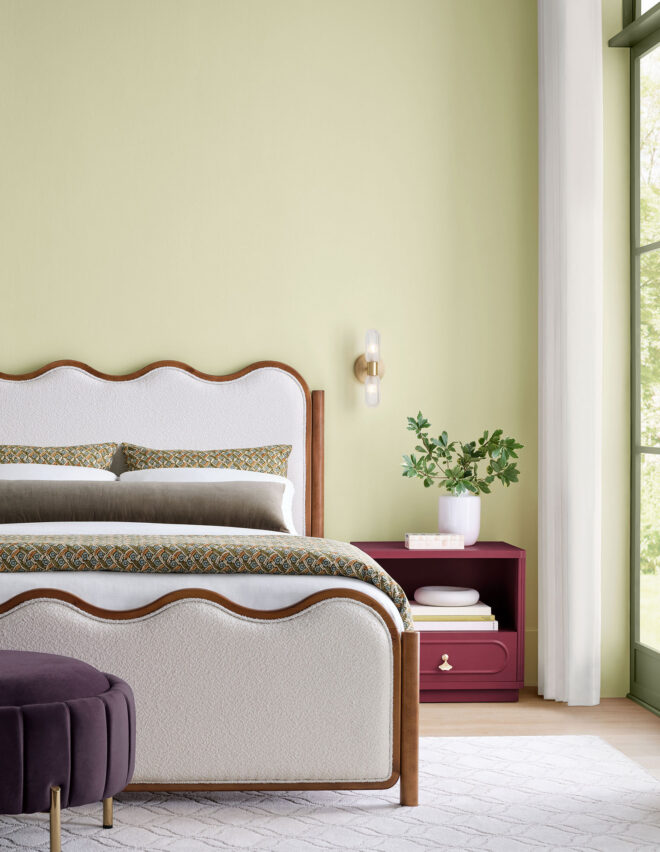
Celery, a luminous hue from Sherwin-Williams is a soft, muted green with yellow undertones that has a laidback vibe.
Why Do Different Paint Finishes Exist?
“The main reasons for sheen differences is to mask subtle imperfections, provide durability to high-traffic areas and absorb or reflect light,” says Trish Picariello, a colour specification and design specialist at Cloverdale Paint.
What’s The Simplest Way to Choose a Paint Finish?
When choosing a paint finish, consider how much wear and tear the surface will experience, the look you’re after and the condition of the surface itself. A front door, for example, is more prone to damage and scuffs than a ceiling, so each may call for a different finish.
“In general, the higher the sheen, the more durable and washable the finish will be. Higher sheen finishes also reflect more light, which can highlight surface imperfections.” — David Underwood, technical marketing manager at Benjamin Moore
On the other hand, director of colour marketing at Sherwin-Williams, Sue Wadden, says a matte or flat finish can help minimize imperfections and create a softer look. “Consider factors such as traffic, moisture, cleaning needs and the condition of the surface when making a selection.”
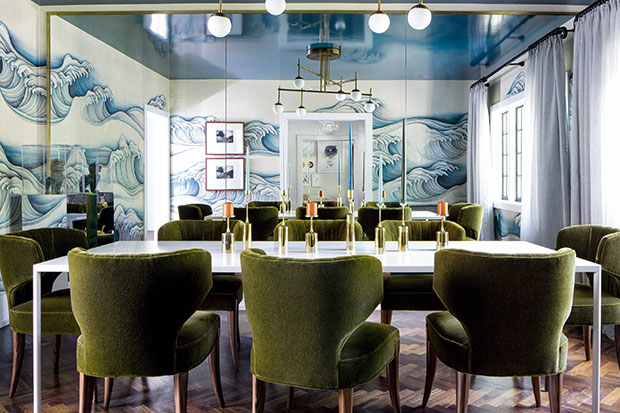
A deep blue lacquered ceiling reflects light in a dining room by designer Colette van den Thillart, offering a perfect example of how a ceiling finish can transform the look and feel of a space.
Paint Finishes by Brand
Paint finishes vary by brand, with different names, levels of sheen and recommended applications. Here’s a breakdown of the options from four leading paint brands, along with expert advice to help you choose the right finish.
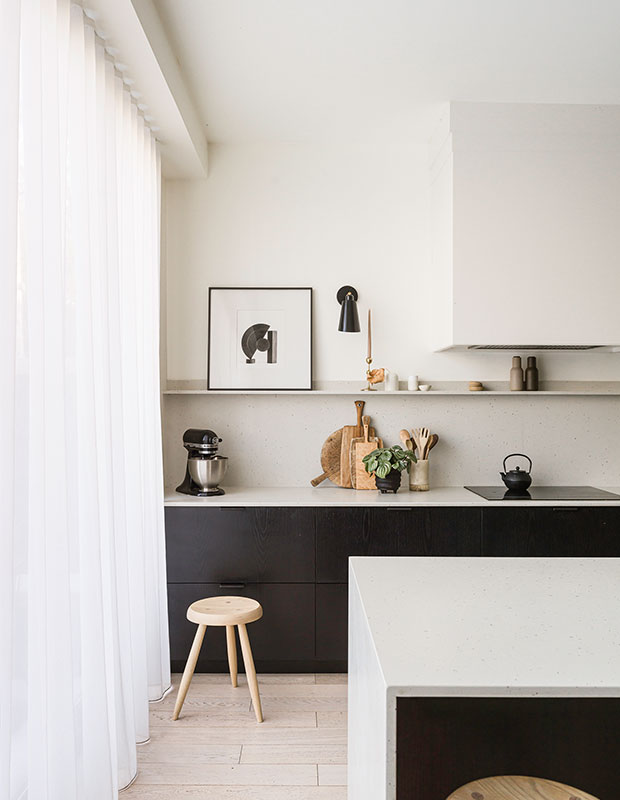
Whisper White by Behr provides a serene backdrop for artist Anna Church’s contemporary home.
Behr
According to Karla Kratz, Behr’s head of colour, the finish also becomes part of the dcsign. “You might choose something softer for the walls, then introduce more sheen on trim, cabinetry or a door to give those details more presence.”
The six interior paint finishes Behr offers are:
- Flat: Non-reflective, ideal for low-traffic areas
- Matte: Low-lustre, reflective and durable
- Eggshell Enamel: Soft and velvety, resists dirt and grime
- Satin Enamel: Peal-like finish, easy to clean
- Semi-gloss Enamel: Sleek, radiant and ideal for high-traffic areas
- Hi-gloss Enamel: Shiny, glass-like finish ideal for high-use areas
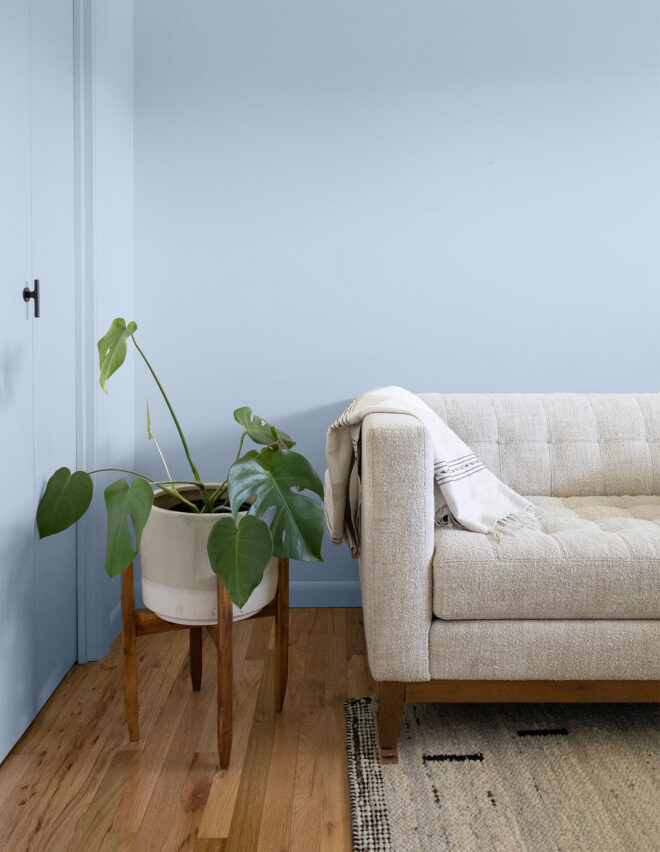
A soft blue by Cloverdale Paint creates a soothing feel in this sitting area.
Cloverdale Paint
“I live in a 107 year old house and many of my interior walls are original plaster,” says Trish. “I choose a flat finish to minimize irregularities and sometimes eggshell which offers a low sheen.”
The six interior paint finishes Cloverdale Paint offers are:
- Flat Paint: Lowest gloss level with almost no shine
- Eggshell Paint: Low-sheen finish with gentle glow
- Pearl Paint: Shinier than eggshell with a soft luminosity
- Low Gloss Paint: Smooth, soft and satin-like
- Semi-gloss Paint: Reflective and durable
- Gloss/High-gloss Paint: Highly reflective and extremely durable
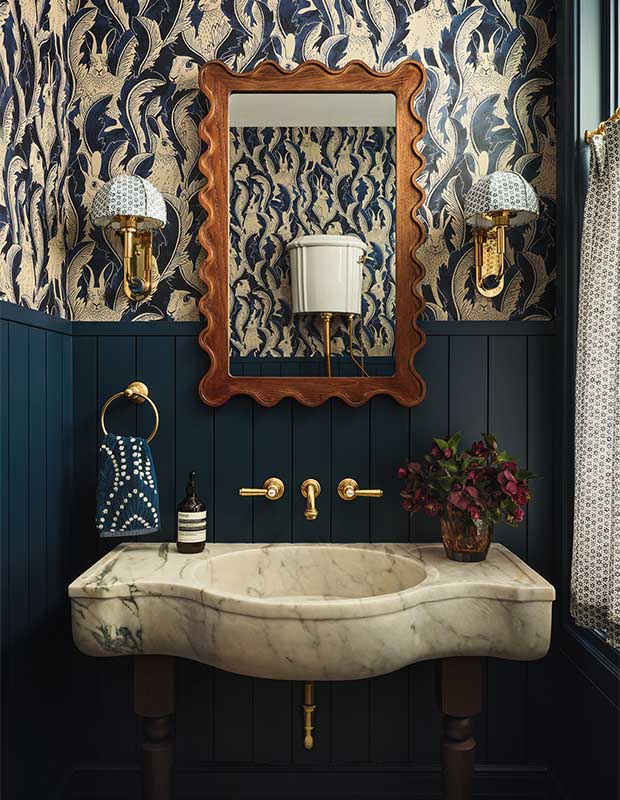
Dark matte panelling painted in Sherwin-Williams’ Gale Force colour balances nicely against this bathroom‘s graphic wallpaper.
Sherwin-Williams
When choosing a paint colour, Sue recommends testing a colour before making a final decision. “Colour and sheen work together to influence how a paint looks in a space, and lighting can dramatically impact the final appearance,” she says.
The 10 interior paint finishes Sherwin-Williams offers are:
- Gloss: Shiniest option, striking appearance
- Semi-gloss: Adds subtle shine, easy to clean
- Satin/Eg-shel: Smooth, easily washable
- Matte: Flat finish, angular shine
- Flat: Non-reflective and low durability
- High Gloss: Most reflective, shiny and lustrous
- Medium Lustre: Higher-gloss finish
- Pearl: Subtle shimmer, lustrous
- Low-lustre: Subtle sheen
- Velvet: Flat finish with hint of sheen
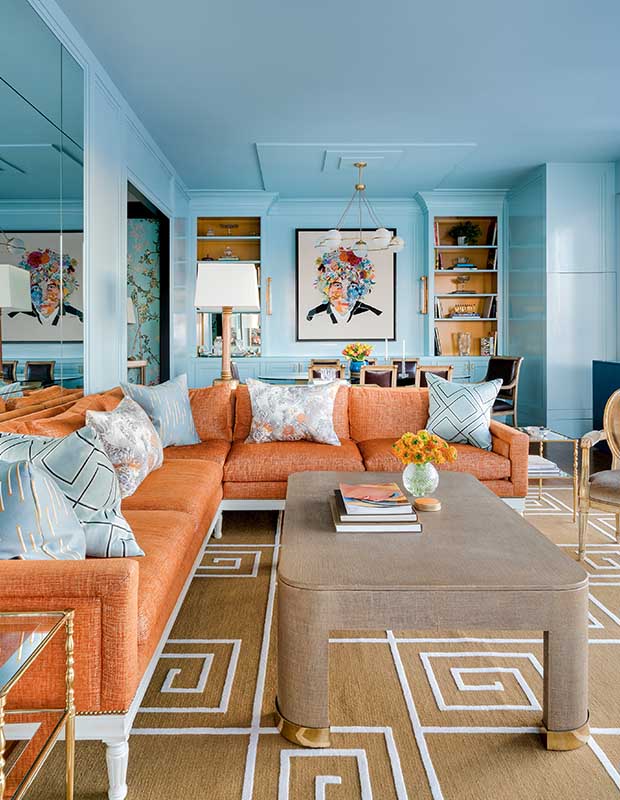
Benjamin Moore’s Soft Chinchilla paint hue in a high gloss creates a fun pop of colour in this NYC apartment.
Benjamin Moore
“From ultra-flat finishes that help create flawless ceilings, to high gloss finishes that make a front door or accent wall stand out, our portfolio includes solutions for every room, surface and style,” says David.
The seven paint finishes Benjamin Moore offers are:
- Flat: Non-reflective
- Ulti-Matte: Shine-free, slightly more durable than Flat
- Eggshell: Low sheen and durable
- Pearl: Medium gloss and highly durable
- Satin: High gloss and stain resistant
- Semi-Gloss: Luminous for a smooth, furniture-like finish
- High Gloss: Mirror-like finish and highly durable
The post Decoding Paint Finishes: Which One Is Best? appeared first on House & Home.
- The 10 Most Popular New Bathrooms Right Now (10 photos)
This Trending Now story features the most-saved bathroom photos uploaded to Houzz between June 15 and Sept. 15, 2026.
A well-designed bathroom balances visual appeal with features that make the space work well. In this countdown of the most-saved new bathroom photos on Houzz,…
- The Top 10 New Exteriors Right Now (10 photos)
This Trending Now story features the most-saved exterior photos uploaded to Houzz between June 15 and Sept. 15, 2026.
A home’s curb appeal comes down to more than its paint color or architectural style. In these 10 most-saved exterior photos, designers pair contrasting…


- 10 Ways to Create a Cozy Home for Fall (10 photos)
The first crisp day, the first red leaf, the sky a richer shade of blue, the yellow school bus making its stops again — as signs of fall begin to pop up all around, take this opportunity to slow down and savor the little things that make the season meaningful to you. From simple, natural decorating ideas…
- How to Organize Your Bathroom on Nearly Any Budget (13 photos)
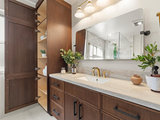
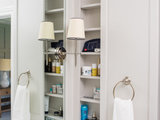
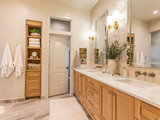
Bathrooms pack in a lot of activity — often in limited square footage. Prioritizing the locations of your most-used items and infusing the space with your style preferences will help create an enjoyable, efficient haven. Whether you’re looking to improve your space with a few basic enhancements…
- 6 Tips for Better Project Photography on Houzz (15 photos)
Strong project photography is an important tool for showcasing your work and attracting new clients. Professionally captured photos help viewers understand the spaces you create and appreciate the details and quality of your finished projects. They’re also versatile marketing assets that can help…
- Rehanna Leong Designs A Kitchen That’s Just Right For Two Or Ready For A Crowd
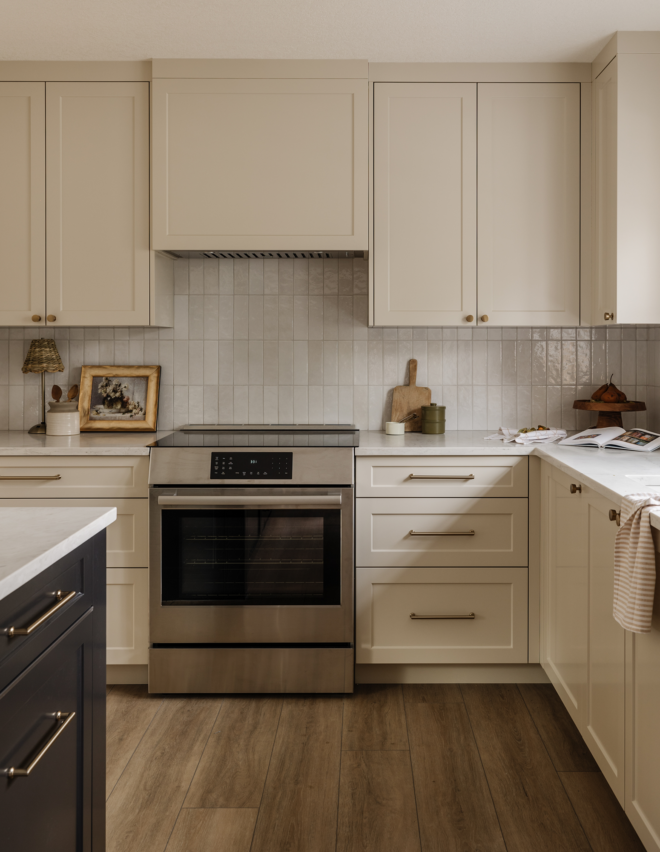
Most days, this kitchen belongs to two, but when the homeowners’ large, boisterous family comes together, it’s a different story. Designer Rehanna Leong of Lili Design Co. in Calgary planned the space for both, pairing a soft, textural palette and clean-lined Bosch appliances with plenty of room to prep, cook and entertain.

We wanted the appliances to feel integrated into the design rather than compete with it. Bosch has a clean, understated aesthetic. – Rehanna Leong, Lili Design Co.
THE WISH LIST
Room to Roast
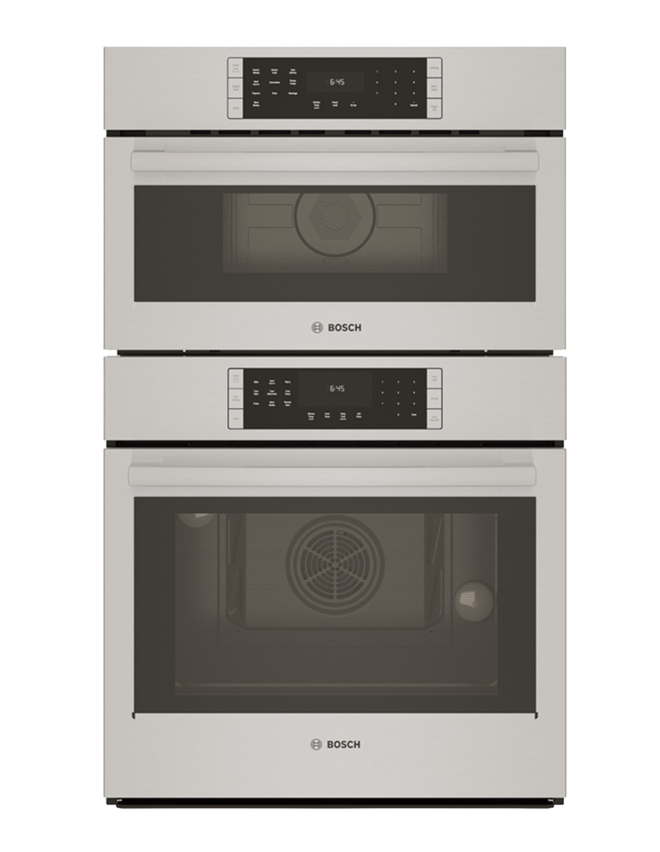
A double wall oven means twice the capacity. The 800 Series 30″ Speed Combination Oven allows you to cook many dishes at once, at different temperatures in each oven.
Space to Chill
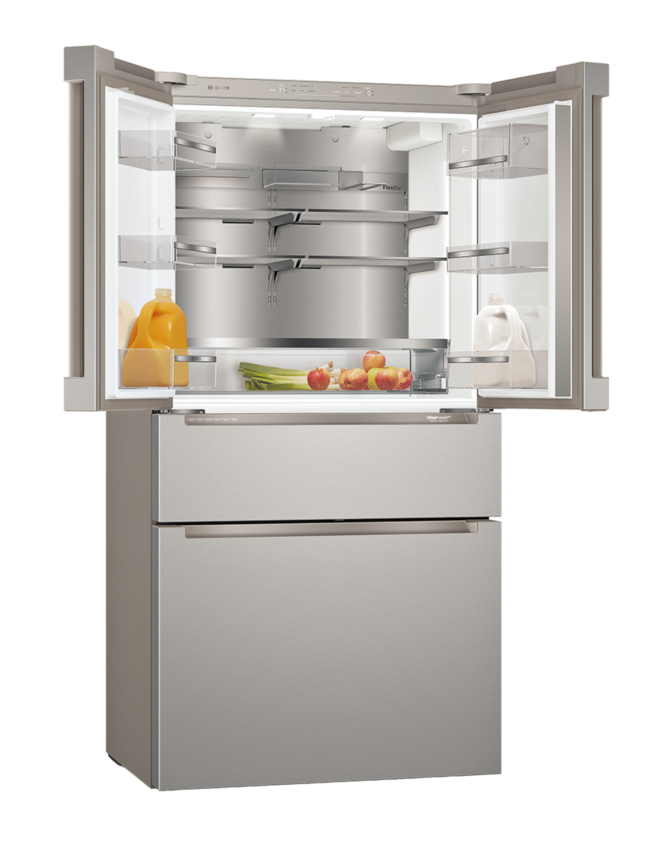
The 800 Series 36″ Counter-Depth 4-Door Refrigerator with internal filtered water dispenser gives fresh food the VIP treatment with a middle VitaFresh® Pro drawer, plus a bottom freezer.
Induction Cooking
The 800 Series 30″ Induction Slide-in Range creates the seamless look Rehanna wanted, while induction delivers the performance the homeowners need. Its smooth glass surface is easy to clean, with fast, precise cooking that works for any meal.
REHANNA’S TIPS FOR CHOOSING APPLIANCES
1. Start Early
Appliances should be part of the kitchen design, not an afterthought. Size, placement and configuration can influence how the space functions.
2. Design For Real Life
Think beyond how a kitchen looks to how you actually use it.
3. Think Long-Term
Choose appliances that will feel right for years to come. “I like Bosch because the design is understated while the technology is focused on performance and everyday ease.”
The post Rehanna Leong Designs A Kitchen That’s Just Right For Two Or Ready For A Crowd appeared first on House & Home.
- A Beautiful Former Chapel on Gotland Turned Airbnb
 Gotland has been on my mind lately! Any long-term readers will know that I fell head over heels in love with this beautiful Swedish island when we sailed there a few years back (see my guide here). The only problem? Living in Malmö, it’s always felt a little tricky to get there, so we haven’t visited nearly as often as I’d like.
But lately I’ve been dreaming about a girls’ weekend at Sibbjäns, perhaps? Or a stay in a beautiful Airbnb? Which is how I stumbled across this gem!
Welcome to a former Baptist chapel dating back to 1912, in the little village of Fide, around 5 km north of Burgsvik in southern Gotland. Today, it’s a much-loved family summer home, which the owners also rent out as an Airbnb. And it’s not hard to see why it’s become a guest favourite! Sleeping up to eight guests, the property is surrounded by beautiful countryside, with lovely cycling routes, a beach just 2 km away and its very own pool!
Inside, the chapel has been transformed into a wonderfully relaxed home, with soaring ceilings, wood-panelled walls, colourful patterned floors, vintage furniture and quirky artwork. I love the slightly eclectic mix, which feels so personal and full of character. And that glazed veranda looks like the perfect spot for long summer lunches!
Shall we take a peek around?


 What a beautiful place! I love all the pattern and the eclectic mix of items which all come together beautifully, and the entire place looks like such a relaxed place to be.
Have you ever visited Gotland? And could you imagine gathering a few friends or family members for a stay in this old chapel? I certainly could! You can find it on Airbnb here, in case you’re looking for something for next summer.
Oh, and one tip if you’re planning to book an Airbnb in Scandinavia. Guests are often expected to bring their own bed linen and towels, unless otherwise specified, so it’s always worth checking before you go.
I suspect this comes from the Swedish summer cottage tradition, where guests often bring their own bedding when staying with friends. It saves the hosts mountains of laundry, especially when washing facilities are limited. A small detail, but definitely worth knowing before you pack your bags!
Thank you so much for stopping by this week, here’s to a relaxing weekend ahead!
Happy Friday!
Niki
Photography courtesy of Airbnb, with thanks.
- The Top 10 New Home Offices Right Now (10 photos)
This Trending Now story features the most-saved home office photos uploaded to Houzz between June 15 and Sept. 15, 2026.
A well-designed home office can support focused work while making room for style and comfort. This countdown features the most-saved new home offices on Houzz,…
- Jack Creasy Designs a Colourful Country Home With Equestrian Flair— Without The Kitsch
The 147-year-old Victorian farmhouse in Caledon, Ont., which is about an hour’s drive northwest of Toronto, is deep in horse country.
The rolling hills are dotted with barns and paddocks and, on weekends, horse trailers rumble at dawn toward shows at Caledon Equestrian Park. It’s a perfect fit for the homeowner, Fenn, a show jumper who’s been riding since she was seven. She boards her horses nearby, and often hosts family and friends at her home, dubbed Attingham Park.
When she hired designer Jack Creasy for the renovation, Fenn was eager to fold in equestrian touches that reflected her passion but didn’t go overboard. “We didn’t want horse wallpaper!” says Jack with a laugh. Fenn agrees: “I was looking for equestrian references without being too on the nose.” A double barn door, sconces embellished with a nod to horse tails, and a console that references saddle stands hint at the theme, but tastefully.
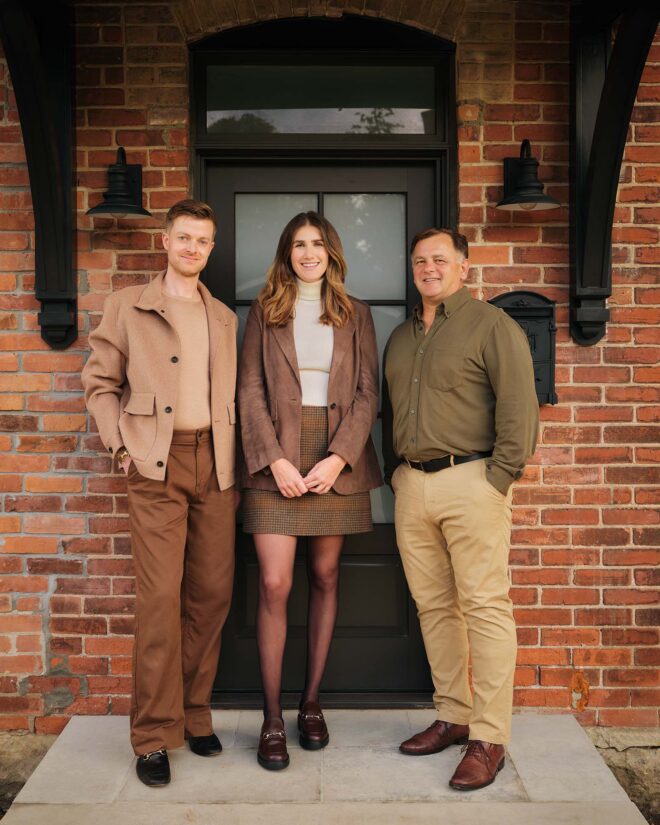
Jack Creasy (left) and Fenn with contractor Slawomir Kaminski.
The design brief for the 3,500-square-foot, three-bedroom Victorian was influenced by British country house design, those timeless manor homes that withstand life with wet dogs, muddy boots, and a dusting of horsehair and hay.
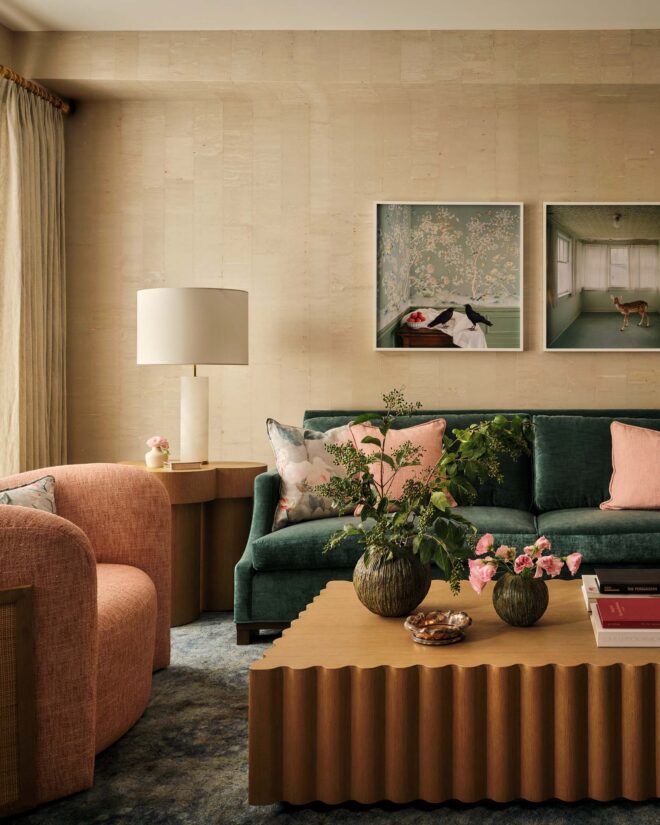
The living room is full of rich texture, with sano plant wallpaper, cherry blossom barkcloth armchairs, a reeded coffee table and velvet sofa.
“My main priority for this house is that it’s welcoming — a place where friends and family can relax and enjoy themselves,” says Fenn, who shares the home with her two big dogs, Ellie and Wallace.
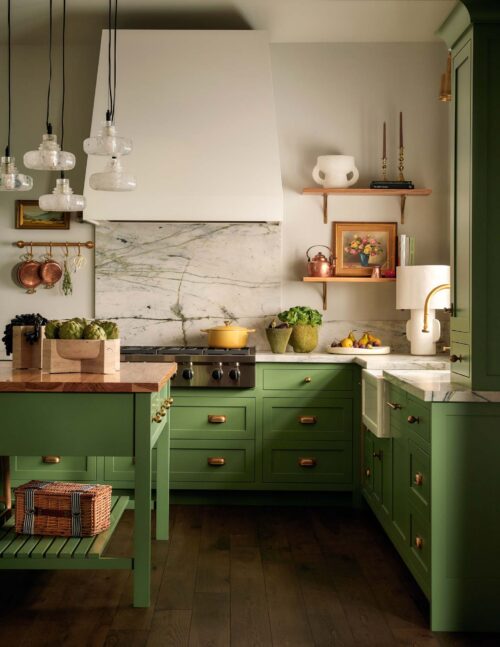
English style reigns in the green painted kitchen; the perimeter counters and backsplash are in cool Calacatta Verde marble while the island’s hickory counter offers warmth.
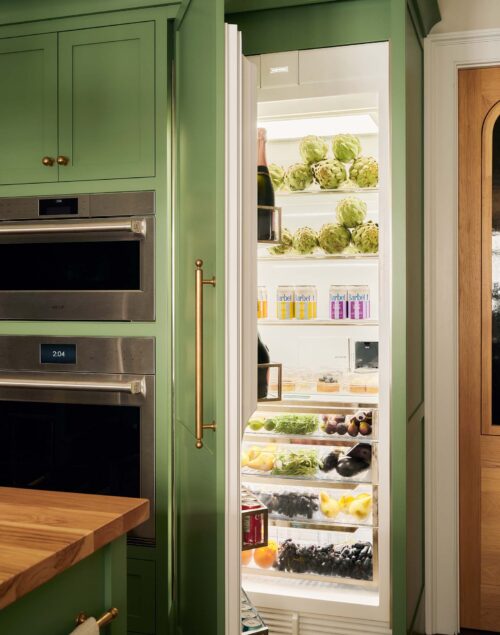
A panel-ready fridge is key to the British look of this kitchen.
“I love to cook: the oven and steam oven are game-changers for entertaining, and the guest rooms and bathrooms are inviting and comfortable.”
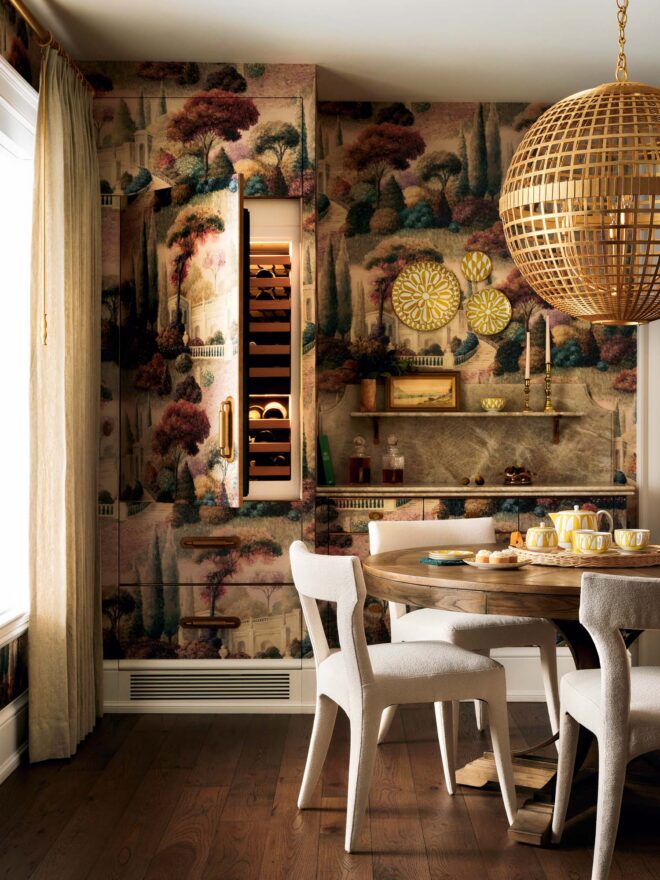
The star of the dining room is the elegant scenic wallpaper, which also wraps the wine fridge and bar area.
The wood floor disguises dog scratches, the white dining chairs are upholstered in forgiving performance fabric and, in the shower, brass fixtures have a living finish that will darken into a coveted patina over time — no polish required.
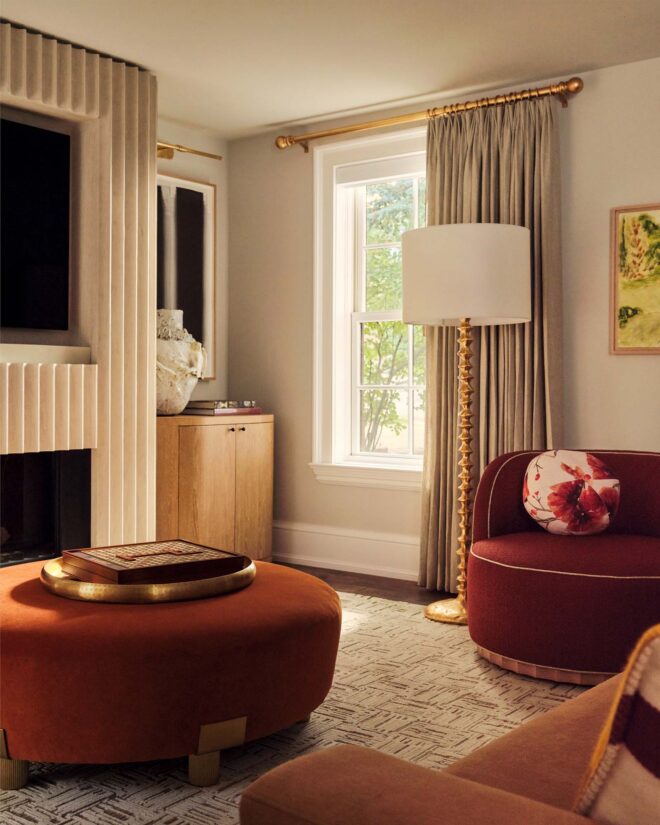
Fenn is a Scrabble fan; games are played in the family room on the ottoman.
“I didn’t want to be constantly worried about things getting damaged, so we tried to pick fabrics and materials that could be lived in,” she says.
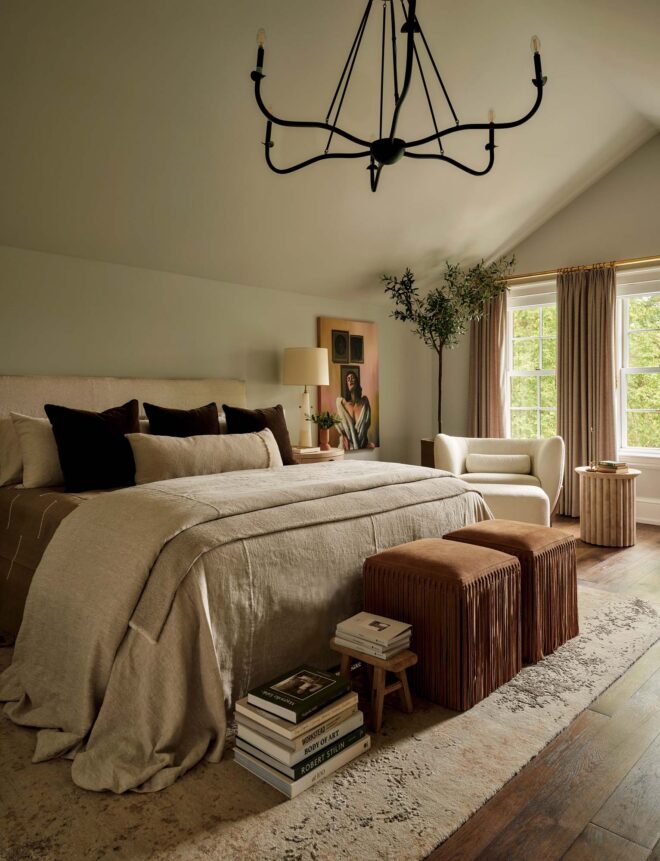
The principal bedroom is tucked under the eaves. Two suede ottomans at the foot of the bed have a Western feel, thanks to fringe trim.
In addition to the relaxed vibe, Fenn was drawn to the bold colour of English country houses, embracing a pasture-green kitchen, minty principal bathroom and mustard laundry room.
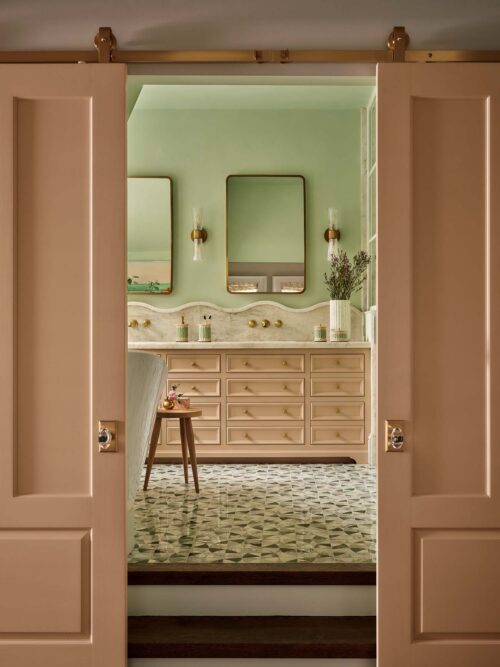
Custom pink barn doors on brass hangers match the vanity and offer a stunning entrance to the principal bathroom.
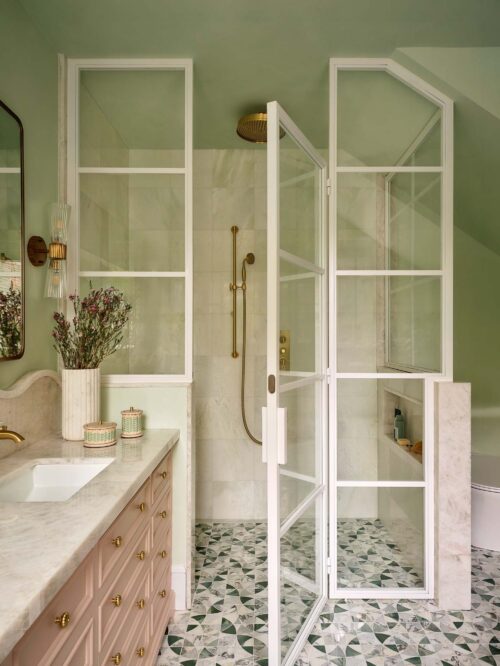
A custom powder-coated metal and glass shower enclosure has substance but still feels airy. The pony wall includes a niche for bottles and conceals the toilet.
Instead of rustic wood, the ensuite has double barn doors that are elevated by a coat of pale pink paint.
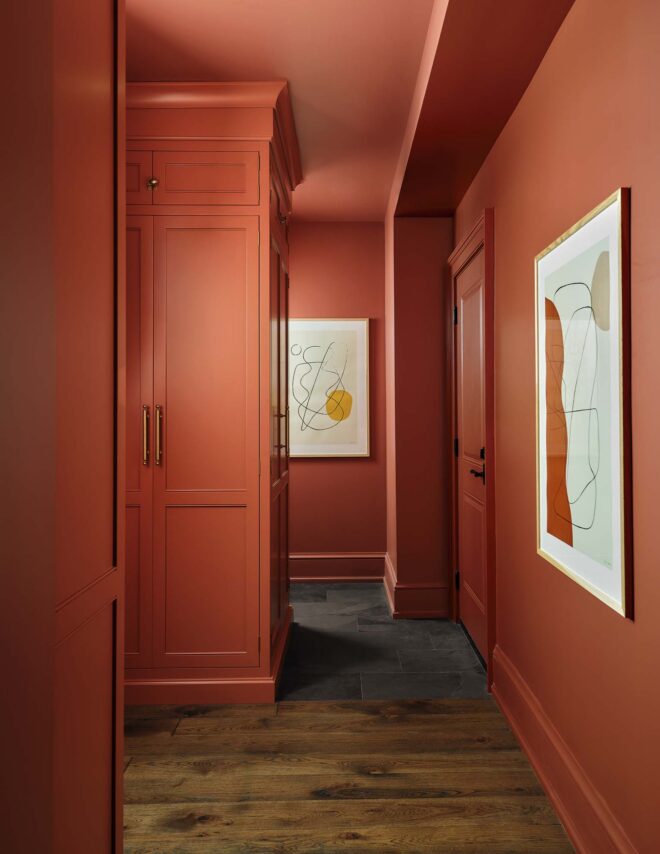
There’s plenty of storage in the pantry, including a pullout bin for dog food in the mudroom area (background). Wood floors transition to hard-wearing slate in the mudroom for wet shoes.
And when Fenn and Jack were combing through paint samples, they fell in love with the rusty cinnamon colour that ended up in the pantry and mudroom, spaces that felt perfectly suited to colour drenching.
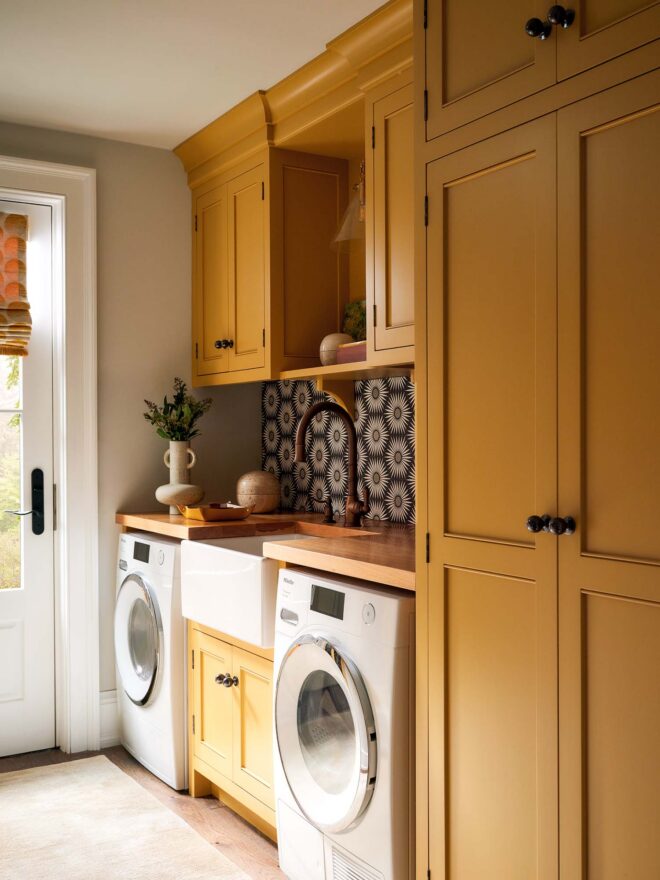
A cement sunburst tile backsplash is graphic in the mustard-hued laundry room.
“I really love colour, and Jack helped me use it in a way that doesn’t feel overwhelming throughout the house,” says Fenn.
Another standout design move is the forest-like scenic wallpaper that wraps the dining room walls — the trees’ cloudlike puffs of teal, soft pink and rust tones pop up repeatedly in other rooms.
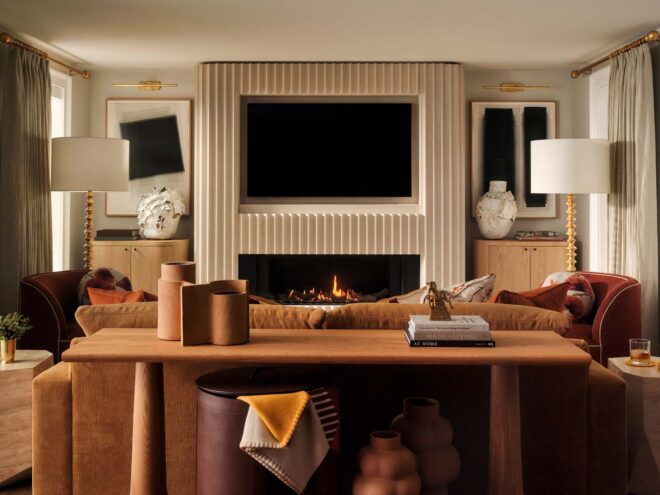
A linear fireplace and TV are surrounded by fluted carved Indiana limestone in the family room; the console is inspired by a saddle stand.
Applying wallpaper on the wine fridge and bar feels completely immersive, like a pastoral cocoon that echoes the surrounding countryside.
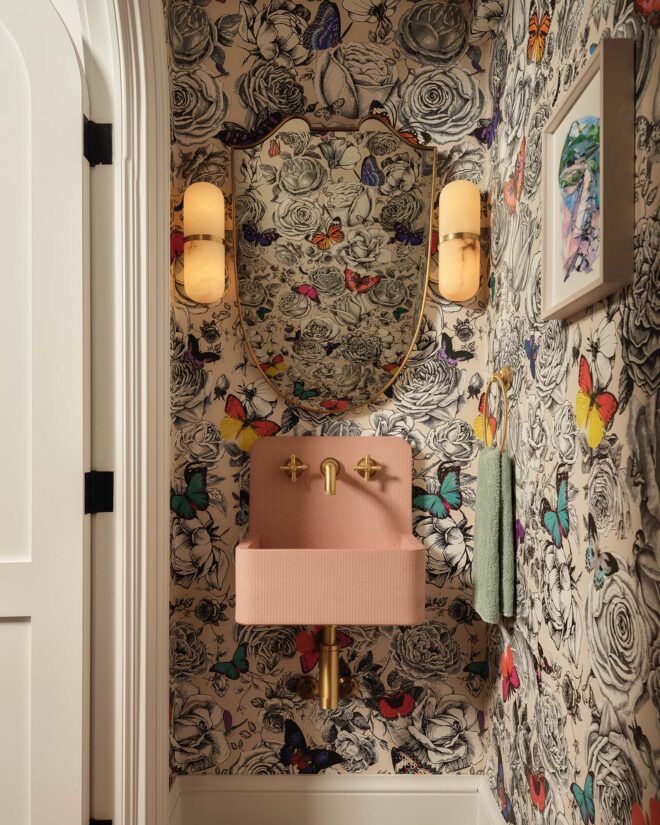
A ribbed pink concrete sink suits the feminine sensibility of the butterfly wallpaper in the powder room.
Fenn appreciates the fine details that go into bespoke craftsmanship. Not surprisingly, the home is filled with custom solutions and millwork, seen in the wavy backsplash that undulates over her bathroom vanity or the fluted carved Indiana limestone fireplace wall in the family room.
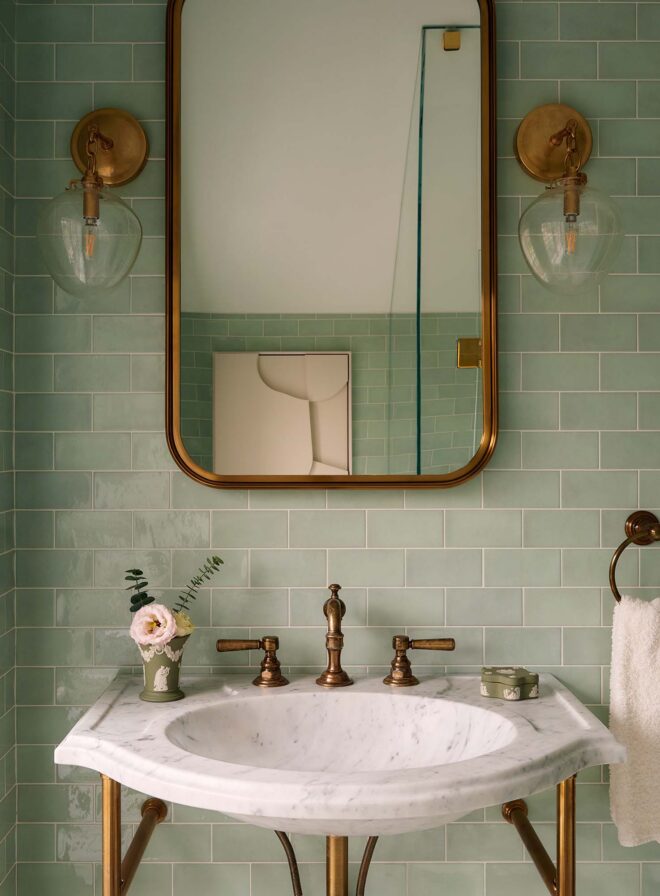
A guest bathroom’s console vanity doubles as a towel bar when needed and, instead of a boxy, ready-made medicine cabinet, Jack modified a pretty mirror.
“In addition to the furniture design, we selected art, decorative accessories, dishware — even placemats — so the design is cohesive throughout,” says Jack. Championing bold shades and unique details has paid off: this house is worthy of a first-place showing.
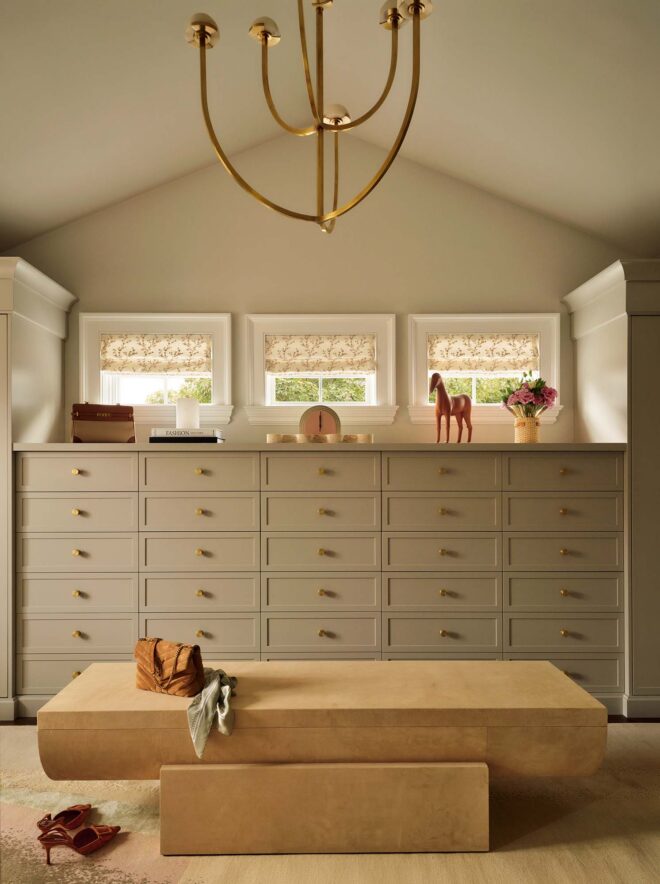
Custom cabinets in the dressing room include two pullout laundry hampers; a suede bench is perfect for putting on shoes or resting a suitcase when packing.
The post Jack Creasy Designs a Colourful Country Home With Equestrian Flair— Without The Kitsch appeared first on House & Home.


Dream House Villa İnterior And Exterior Design


Ready To Start New Project With Intrace?
You can reach detailed information about the services we offer within the body of Architecture, and you can contact us with any questions you may have.
We want you to know that we will be happy to answer your questions. Contact us to get detailed information about our work and to see what we can do for you.